

American diaspora communities are extending the New Year season well beyond January 1. They are hosting public festivals, parades and cultural events throughout January and well into March, that invite anyone to take part.
2026 may officially begin on January 1, but for much of the world, the celebration has not even started. Across Asia, Eastern Europe, and North Africa, millions of people welcome the ‘new year’ weeks later.
From Amazigh New Year gatherings in January to the Chinese Lunar New Year celebrations that arrive in February, the U.S. calendar quietly fills with second chances to ring in the year.
January 12, Yennayer
Yennayer (“Yenn” means one and “Ayur” means month) is one of the oldest continuously observed New Year traditions in the world. Morocco’s Amazigh (or Berber) people, living in the Atlas Mountains, have celebrated Yennayer for almost 3,000 years.
This year (the 2976th year in the Amazigh calendar), it falls on January 12 due to its historical alignment with the Julian calendar rather than the Gregorian.
It is rooted in an agrarian calendar, not a religious one, marking the beginning of the agricultural year tied to farming cycles, rainfall hopes and food security.
After years of advocacy by Amazigh activists seeking cultural recognition, King Mohammed VI announced in May 2023 that Yennayer is an official national holiday.
Two cultural organizations in the United States are staging Amazigh New Year (Yennayer) celebrations in 2026 that aim to share Amazigh heritage with American audiences: the Amazigh American Network Organization (AANO) and the Algerian American Association of Greater Washington (AAAGW).
On January 10, 2026, AANO will host a public Yennayer celebration in Somerville, Massachusetts, at the Center for the Arts at The Armory, featuring music, dance and cultural programming focused on Amazigh heritage.
In the Washington, D.C. area, AAAGW is organizing its Yennayer 2026 Exchange Day and Fair in Fairfax, Virginia, on January 17, bringing together community members and the public for cultural exchange, traditional food and performances. The fairs often feature open-air activities, offering a cultural twist on classic outdoor adventures with kids.
January 14, Orthodox New Year
January 14 marks the Orthodox New Year, also known as the “Second” New Year or Old New Year.
The date reflects the 13-day difference between the Julian and Gregorian calendars, meaning that January 1 on the Julian calendar falls on January 14 in the Gregorian calendar.
It is a holiday celebrated by Eastern Orthodox Christians and Slavic communities, including Russians, Serbs, Ukrainians, and Macedonians.
It is generally quieter than the nationwide celebrations on January 1. Communities mark the Orthodox New Year with church services, family gatherings, and traditional meals.
February 17, Chinese (Lunar) New Year
February 17, 2026, marks the Chinese (Lunar) New Year. It starts on the first new moon that falls between late January and mid-February. In 2026, the holiday lands on a Tuesday, ushering in the Year of the Horse.
The holiday traditionally starts the evening before, on February 16, with a family reunion dinner and continues for 15 more days until the Lantern Festival on March 3.
In China, the holiday, officially known as the Spring Festival (Chūnjié), includes a seven-day public holiday. In the United States, it is not a federal holiday, although U.S. lawmakers have submitted draft legislation proposing federal recognition in January 2025.
The Lunar New Year has gained broader recognition in 2023, when the United Nations designated it as a floating holiday and encouraged its staff to avoid official business on that day.
The festival centers on family reunions, ancestral respect and symbolic rites meant to bring fortune and prosperity.
The festivities start with family reunion dinners, home cleaning before the holiday to sweep away bad luck, the exchange of red envelopes with money, and decorations in red for good fortune.
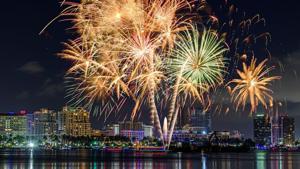
Fireworks and lion dances remain ubiquitous in many communities to usher out the old year and welcome the new. The New Year celebrations culminate in the Lantern Festival on the 15th day.
In the United States, the San Francisco Chinese New Year Festival and Parade is one of the largest celebrations nationwide, as well as outside Asia. It is a multi-week event in San Francisco’s Chinatown ending with a nationally televised parade that draws hundreds of thousands of spectators.
As families travel across states and borders to reunite, demand for air travel rises during this extended holiday season. However, California’s greenest cities await them.