

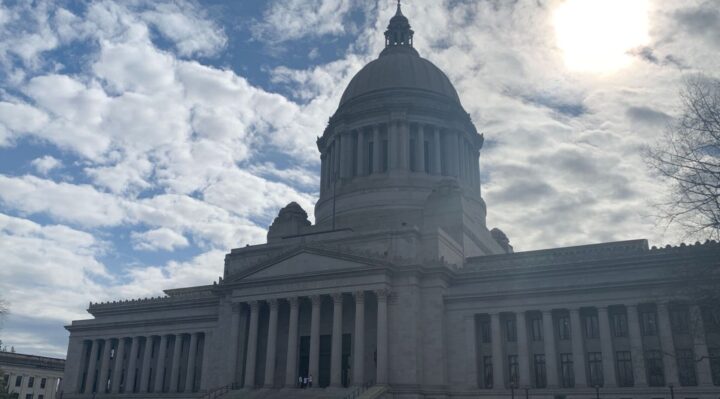
OLYMPIA — Washington moved one step closer to having its first income tax as the House Finance Committee advanced a bill known as the “millionaires tax.”
Republicans made a final push this week to take the bill out of legislators’ hands and leave it up to voters. That effort was struck down this morning.
The tax would only impact those who make more than $1 million a year, but some warn the financial impact could go far beyond that. The first $1 million an individual makes would not be impacted by the bill. The rest would face a 9.9% tax.
The legislation would generate an estimated $3.5 to $3.7 billion a year.
Eastern Washington Representative Suzanne Schmidt says she has gotten many calls from small business owners saying this tax would either force them to close or leave the state. “Because Spokane and Spokane Valley is so close to the Idaho border it is simpler” Schmidt said.
Governor Bob Ferguson has said the bill should include a tax break for small businesses so they wouldn’t have to pay business and occupation tax on the first $2.5 million of gross revenue.
Democrats argued the tax is needed to fill financial deficits and strengthen the state’s economy.
“It is necessary for us to fully fund our basic education, higher education, early childhood, childcare,” said Rep. Alex Ramel, a Democrat.
Historically, Washington voters have struck down income taxes. Republicans argued that is why this proposal should be on the ballot, with letting voters decide being the only way to know if a millionaires tax is what people want.
“Trusting politicians with an income tax, the track record says don’t do it,” said State Sen. Mark Schoesler, a Republican.
Democrats say the tax is needed to create a more just tax system in the state.
“This is one of those moments where we have an opportunity to make our tax system better and more sustainable for the future,” said Rep. Sharon Wylie, a Democrat.
Republicans say they are ready to continue fighting against the bill on the House floor. Democrats estimate it would generate around $3.7 billion dollars a year. If passed, it would go into effect in January 2028.
© 2026 KAYU FOX 28. All rights reserved. Content may not be reproduced, distributed, or transmitted without written permission.