
UPDATE: January 28 at 3:50 p.m.
The Washington State Senate passed Senate Bill 5855, prohibiting law enforcement officers, including ICE agents, from wearing face-concealing masks while interacting with the public.
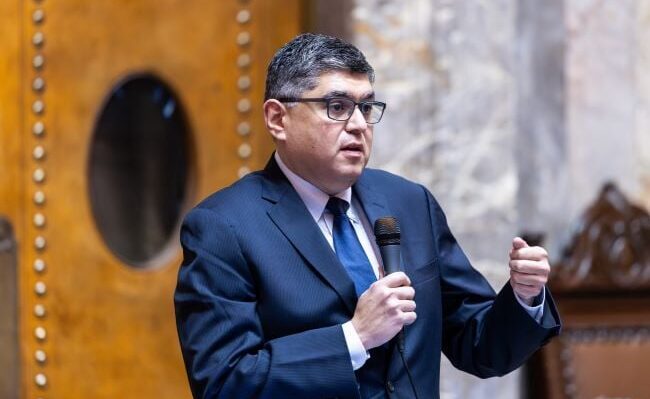
Sponsored by Sen. Javier Valdez of Seattle, the legislation strengthens state law by requiring officers to be identifiable through a clearly displayed name or other identifying information.
“We are seeing a disturbing trend across the country and here in Washington: masked federal agents carrying out enforcement actions without accountability, detaining families, and terrorizing communities,” Valdez said. “Washington must lead by example. We cannot allow anonymity and unchecked power to replace trust and accountability.”
Prohibited face coverings include balaclavas, tactical masks, gaiters, ski masks and similar items. The bill allows clear or translucent face shields, medical masks, respirators used in hazardous conditions and helmets worn for transportation.
The bill allows individuals detained by unlawfully masked officers to seek legal action, including compensation and attorney fees. Officers already complying with identification requirements are protected from liability.
The bill now moves to the House for consideration.
OLYMPIA, Wash. – Sen. Javier Valdez (D-Seattle) is pushing a bill to prevent law enforcement officers in Washington from wearing face-concealing masks during public interactions.
Senate Bill 5855 addresses the use of masks by Immigration and Customs Enforcement agents in immigration raids. The bill prohibits items such as balaclavas, tactical masks and ski masks while allowing clear face shields and medical masks.
“If a law officer is stopping or questioning you, you have the right to know who they are,” Valdez said in a release. “Anonymous policing erodes trust, invites abuse and threatens the safety of everyone involved.”
The legislation builds on existing requirements that officers must be identifiable by name or other information. Exceptions are made for undercover operations and SWAT officers needing protective gear.
The bill allows people to take legal action if detained by officers violating the law, enabling them to seek compensation and attorney fees.
“This bill protects responsible officers and the public,” Valdez said. “Our communities deserve to know who is exercising government power in their neighborhoods.”
A hearing for the bill is expected early in the 2026 legislative session in the Senate Law & Justice Committee.
ORIGINAL COVERAGE: December 28 at 4:40 p.m.