

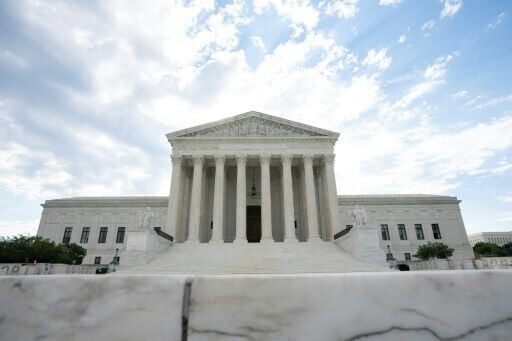
BOISE, Idaho – The U.S. Supreme Court announced today that it has agreed to review Hecox v. Little, which determines the legality of Idaho’s Fairness in Women’s Sports Act.
The Supreme Court a similar case in West Virginia.
This decision comes just two weeks after the Supreme Court upheld an Idaho law for youth.
Idaho Attorney General Raúl Labrador shared this announcement in a press release and said that the Supreme Court’s decision came after he urged the Court to take action in a supplemental brief he filed last week.
“I am thrilled the U.S. Supreme Court has agreed to hear our case. For too long, activists have worked to sideline women and girls in their own sports. Men and women are biologically different, and we hope the Court will allow states to end this injustice and ensure that men no longer create a dangerous, unfair environment for women to showcase their incredible talent and pursue the equal opportunities they deserve,” he wrote.
The case began on April 25, 2020, when Lisday Hecox, a transgender woman attending Boise State University and Jane Doe, a high school student, filed a lawsuit in the United States District Court of Idaho challenging the Fairness in Women’s Sports Act, which requires sports teams that receive state funding to maintain rigid designations based on sex.
In the original complaint, Hecox, who was represented by the American Civil Liberties Union wrote that the act “categorically bars women and girls who are transgender, and many who are intersex, from participation in school sports consistent with their gender identity” and that “This law is not just out of step with science and prevailing norms of inclusion adopted by athletic associations across the country and around the world, it is unconstitutional and violates federal law.”
The case had previously been stopped when the Ninth Circuit blocked enforcement of the law.
Labrador wrote in his release that Alliance Defending Freedom assisted both Idaho and West Virginia in defending the two laws.