

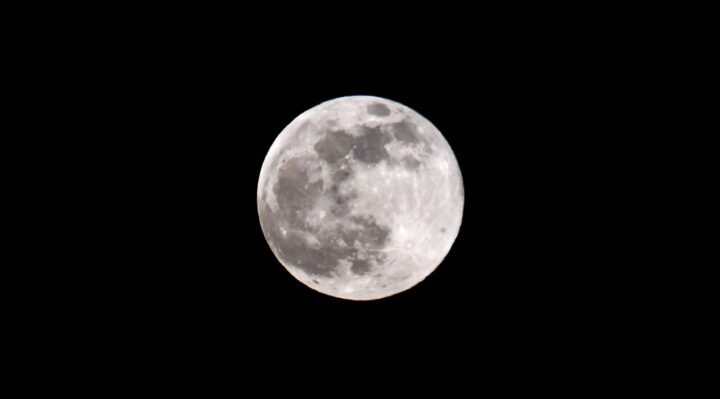
October will be a celestial delight with a supermoon and two meteor showers illuminating the night sky.
On October 6, the supermoon will be at its peak, appearing about 30% brighter and 14% larger than a typical full moon.
This event coincides with “International Observe the Moon Night” on October 4, a global event for moon enthusiasts.
While “supermoon” is not an official astronomical term, it generally describes a full moon that is 90% or closer to perigee. The scientific term for this alignment is “perigee syzygy,” though it is less commonly used, according to Nasa.
Misleading images often accompany supermoon stories, using photographic techniques to exaggerate the moon’s size. These images can lead to misconceptions about what to expect. In reality, a supermoon will not cause natural disasters such as flooding or earthquakes, contrary to some non-scientific claims.
From October 6 to 10, the Draconid meteor shower will grace the skies. Originating from the comet 21P Giacobini-Zinner, the Draconids can produce up to 10 meteors per hour. They appear to radiate from the Draco constellation in the northern sky.
However, if the Draconids are overshadowed by the bright supermoon, skywatchers can look forward to the Orionid meteor shower.
Peaking on October 21, the Orionids promise about 20 meteors per hour. This shower occurs as Earth passes through debris from Halley’s Comet, offering a spectacular display.
For the best viewing experience, look for the Orionids on October 21, during the new moon, when the sky will be darkest.