
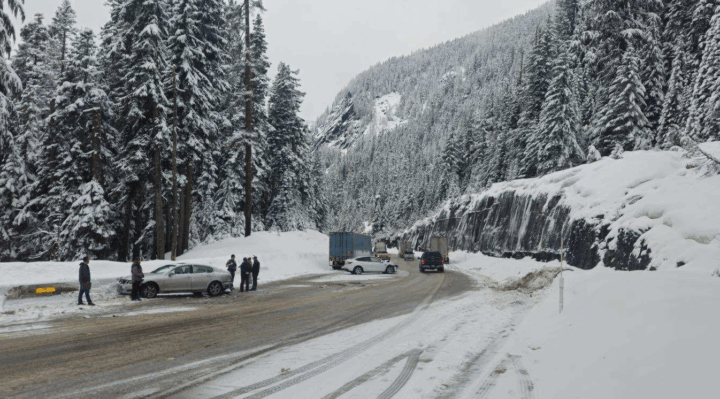
SNOQUALMIE PASS, Wash. – The Washington Department of Transportation (WSDOT) announced new technology implemented at Snoqualmie Pass on I-90 to improve controlled avalanches, safety and road delays.
The objective is to trigger an avalanche safely and in a controlled manner, so as not to harm or disrupt drivers and allowing time for clean-up before the interstate can reopen.
Since the 1980s, artillery systems have been used to trigger controlled avalanches along the pass. These systems included rifles, tanks and even a World War II-era Howitzer artillery gun loaned by the U.S. Army.
“Launching artillery was no small task,” WSDOT said in a blog post. “Set up alone could close I-90 for up to six hours before firing the first shot. Preparing for extended closures requires significant time and staffing.”
Now, thanks to funding from state Senate Bill 5161, WSDOT was able to purchase and install a new remote-operated avalanche control system powered by solar panels.
“What once took four to six hours can now be ready at a moment’s notice,” WSDOT said.
Crews will also no longer have to work in close proximity to artillery equipment and projectiles, which carry safety risks.
The system is expected to last a minimum of 30 years. WSDOT said similar remote avalanche systems implemented at Stevens Pass have already been successful.
An average of 34,000 vehicles travel daily on Snoqualmie Pass, according to WSDOT, including commuters, travelers and cargo trucks. Several controlled avalanche missions are conducted yearly.
“Unmanaged avalanches can be deadly,” WSDOT said. “While we can’t control the weather, we can reduce risk to travelers and our crews.”