

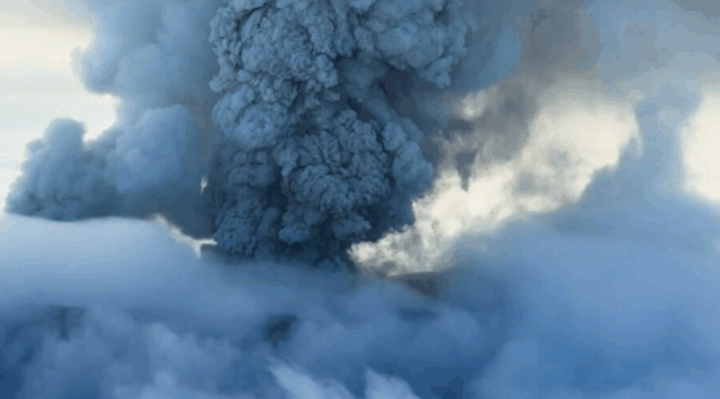
Some observers around the world are connecting Russia’s volcanic eruption to the 8.8 magnitude earthquake on that country’s far-eastern shore.
The Pacific Northwest Seismic Network at the University of Washington says the historic earthquake caused many aftershocks, with one measuring 6.9 magnitude.
Director Dr. Harold Tobin says Russia has some volcanoes in the region nearby, and they are like those in the Cascadia Subduction Zone that stretches from British Columbia to Northern California, but Russia’s recent activity doesn’t indicate we’ll see quakes or eruptions along our coastline.
“The fact that there was a big earthquake within the Ring of Fire, on the other side of the Pacific, does not mean that anything has changed about the Cascadia Subduction Zone, or the Cascade volcanoes. We see no signs that one is having an impact on the other. These are just signs of plate tectonics in motion. They do happen from time to time,” said Tobin.
Russia’s 8.8 magnitude quake sent tsunami warnings across the Pacific Ocean.
“It shows that the warning system in place works really well. There was in fact a tsunami. It was relatively small here along the Washington coast, but it did do a million dollars’ worth of damage in Crescent City, California, and did damage in Hawaii as well. Far away from that earthquake, the tsunami really had an impact. It could have been much larger, in which case those warnings would have been real life savers,” added Tobin.
The network says recent quakes on Mt. Rainier do not signal any kind of volcanic activity there.
“The earthquakes and activity around our volcano, Mt. Rainier, have been occurring. It’s unusual only in that they are making the news and happening close together in time. 8.8 is unusual because it is a very large earthquake, but the bottom line is that there is no indication that there is any tectonic activity increasing. It happens kind of randomly over time. Random doesn’t mean on a regular schedule. It means sometimes they come in clusters. When it comes to volcanoes, there often are precursors, and we can see a volcano becoming more active after being at rest. That may or may not lead to an eruption. Back in 1980, there were about two months of seismic activity, the bulging of the mountain and all kinds of observations that led to the warning that it [Mt. St. Helens] might erupt, and then it did,” said Tobin.
As far as the quakes along the Alaska Peninsula, Dr. Tobin says these are part of a series in the last five years in that general area, west of Kodiak Island, but adds that these are normal for Alaska. He notes that The Olympic Peninsula could see those same kind of quakes someday, but a lot more people would be in harm’s way in Washington, so getting seismic alerts for your phone and taking them seriously is very important.