

By Michael Lee Simpson
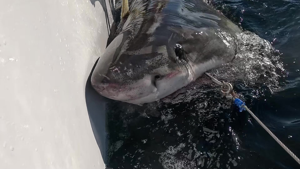
An 8ft 10in, 456-pound great white shark is prowling just 42 miles away from Myrtle Beach — proving vital to mapping Atlantic migration patterns.
Juvenile female great white Brookes, first tagged by OCEARCH off Nova Scotia in October 2025, was detected near Charleston, South Carolina, earlier this month before continuing up the coastline.
Researchers say the Carolinas serve as a key winter habitat, offering comfortable water temperatures and abundant prey.
Scientists are tracking Brookes’ movements to better understand juvenile migration patterns along the Atlantic.
“This area, the Carolinas in general, is part of what we would think of as a core area of overwintering for white sharks,” said OCEARCH data scientist John Tyminski.
The shark’s current location reflects the species’ preference for regions that provide both suitable environmental conditions and abundant food sources during colder months.
According to Tyminski, the water temperature in the Carolina coastal waters remains “quite adequate and comfortable” for white sharks throughout the winter season.
Food availability plays a crucial role in Brookes’ decision to remain in the area.
Tyminski explained that local fishing captains have reported strong populations of prey species in the region.
“There are things like bluefish and menhaden, and a little further offshore, there are some types of tuna,” he said.
“These can all be pretty good sources of food for a shark like Brookes.”
The data scientist emphasized that Brookes’ behavior differs significantly from that of adult white sharks, whose movements are often influenced by reproductive activities.
“Brookes is a juvenile, so it has nothing to do with mating or reproduction or anything like that,” Tyminski said.
Environmental conditions in the region provide the thermal comfort that white sharks require, while the diverse marine ecosystem offers reliable feeding opportunities.
The presence of multiple OCEARCH-tagged sharks in the Carolina waters demonstrates the region’s importance as a white shark habitat.
The organization’s tracking data reveal that many tagged sharks use these coastal waters in winter, underscoring scientists’ understanding of Atlantic white shark migration patterns.
Brookes’ current position represents part of a larger seasonal movement pattern observed in white shark populations along the Eastern Seaboard.
These sharks typically move to warmer southern waters during winter months before beginning northward migrations as temperatures rise in spring and summer.
The tracking of Brookes and other white sharks provides valuable scientific data about the species’ behavior, habitat preferences, and migration routes.
This information contributes to conservation efforts and helps researchers better understand the ecological needs of these apex predators.
As Brookes continues her stay in Carolina waters, researchers will monitor her movements to gather additional data about juvenile white shark behavior patterns.
Tyminski said: “It’s about comfortable conditions and it’s about food sources.”