
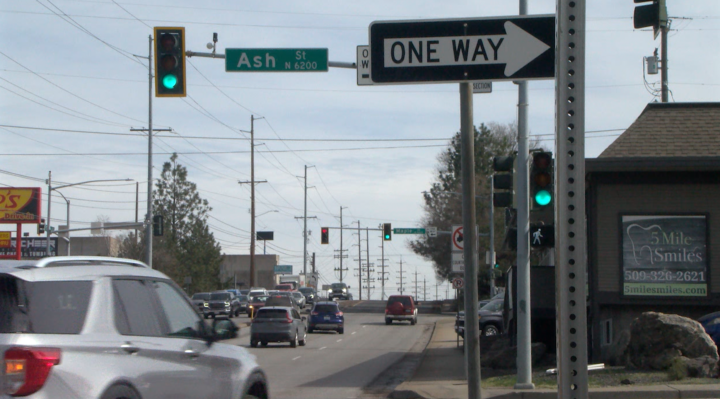
SPOKANE, Wash. — Major changes are coming to one of Spokane’s main arteries as the city plans to narrow car lanes significantly on the northern stretch of Ash Street.
The project will affect about a mile-long stretch from Wellesley northbound to Francis. The traffic lanes are currently 15 to 20 feet wide — wider than most interstate highways. By the end of this year, these lanes will be narrowed down to 11 feet.
The Maple-Ash couplet project was supposed to reduce wide lanes on Maple Street and Ash Street. The city mentions the wider lanes on these two one-way streets cause speeding and increases chances of car crashes. Due to tight funding, the city will only repaint lanes on Ash Street for now.
“Ash is a bigger safety issue than Maple,” said Jon Snyder, director of transportation and sustainability.
Some residents who live along this street have complained about fast cars and crashes right into residents’ homes.
“Council members Zappone and Klitzke have been very focused on traffic safety. And they’ve told me stories that they’ve talked to folks that live on that stretch and have had cars end up in their front yard,” Snyder said.
The $150,000 the city is using for this project comes from the “Safe Streets for All” fund, which collects money from camera-enforced speeding and red-light tickets.
With the extra feet they will shave off the lanes, the city will add curbside parking. City leaders note curbside parking is already available on this stretch, but most people aren’t aware of it. They also say it will help slow traffic down and create a barrier between the street and homes.
“We’re trying to do whatever we can to make things safer with how we design our roads,” Snyder said.
As of now, there is no specific date when the city plans to repaint this street. They expect to get it done by the end of this year, and say the road should be closed only for a couple of days when it happens.
© 2026 KAYU FOX 28. All rights reserved. Content may not be reproduced, distributed, or transmitted without written permission.