
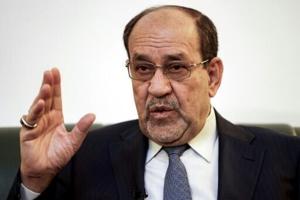
The leading candidate to become Iraq’s next prime minister, former premier Nouri al-Maliki, told AFP on Monday that he will not withdraw his nomination after pressure from the US, while also seeking to allay Washington’s concerns.
Since the US-led invasion that overthrew former ruler Saddam Hussein in 2003, Iraqi leaders have struggled to find a balance between two global powers competing for influence in the country: neighbour Iran and its arch-rival the United States.
Last month President Donald Trump intervened by issuing an ultimatum that if Maliki — a two-time former premier with close ties to Iran — was named Iraq’s next prime minister, the US would no longer help the country.
“I have absolutely no intention of withdrawing out of respect for my country, its sovereignty, and its will,” Maliki told AFP in an interview.
“No one has the right to say whom we can or cannot vote for,” the powerbroker added.
“I will not withdraw until the end.”
Trump’s threat left Iraqi leaders at a loss, particularly within the Coordination Framework — a ruling alliance of Shiite groups with varying degrees of links to Iran than nominated Maliki.
Maliki told AFP that “countries have the right to set conditions in their dealings with Iraq,” but changing the nomination depends on the Coordination Framework, which still backs him.
– ‘One army under one command’ –
Maliki — who is Iraq’s only two-term prime minister, serving from 2006 to 2014 — also rejected claims that his relationship with the US was bad during his previous tenure.
Maliki at first enjoyed support from the American occupation following the 2003 invasion, but later fell out with Washington over his growing ties with Iran and allegations that he pushed a sectarian agenda.
Iraq’s new premier will be expected to address Washington’s longstanding demand that Baghdad rein in Tehran-backed factions that are designated terrorist groups by the US.
Maliki said that Washington has conveyed several messages to Iraqi leaders.
“They seek changes in the state’s policies,” he said.
Washington’s concerns include the future of the Hashed al-Shaabi — a former paramilitary alliance that has integrated into the armed forces — as well as disarming pro-Iran armed factions and accusations that some Iraqi entities are helping Iran evade US sanctions on oil exports.
Maliki sought to reassure the US on Monday.
“In fact, what America wants is not new. These are our demands,” he said.
“We want weapons in the hands of the state. We want a centralised military force. We have said it repeatedly: we want one army under one command, directly under state authority.
“It’s quite possible” to achieve a deal with pro-Iran armed factions, he added.
“There is a good basis for understanding with the factions” but this cannot happen “through force, war or confrontations,” he said.
Maliki added that he believes factions “do not want to expose Iraq to any danger.”
Washington has also demanded that the eventual Iraqi government exclude Iran-backed armed groups — an issue that is under discussion, according to Maliki.
Some of these groups have increased their presence in the new parliament and have seen their political and financial clout increase.
“We want those who participate in the political process and the government to lay down their arms,” Maliki said.
“Those who lay down their arms are welcome to be part of the next government.”
– No attacks –
After decades of conflict, Iraq has begun to enjoy some stability in recent years, yet its politics remain volatile, shaped not only by internal disputes but also by regional dynamics.
Today, all eyes are on negotiations between the US and Iran over Tehran’s nuclear programme, with a third round of talks scheduled for Geneva on Thursday.
With fears rising that Iraq could be dragged into a war if the US strikes Iran, Maliki vowed to prevent attacks on diplomatic missions in Iraq if he becomes prime minister.
“All countries can be assured that we will prevent any violation against their embassies or officially recognised interests in Iraq,” Maliki said.
“We will not allow any party to target any country that maintains a diplomatic presence.”
Previously, Iran-backed armed groups attacked US missions and troops in Iraq.
Maliki defended Iraq’s relations with Iran, which he said “rest on the principle that Iraq’s sovereignty is respected” and that “shared interests define this relationship”.
“We share a 1,300-kilometre border and mutual interests with Iran,” he added.
Despite its oil wealth, Iraq depends on imports from Iran to meet its energy needs.
Maliki warned that “if Iran cut off our natural gas supply… it would be a major catastrophe.”
ak-rh/dl