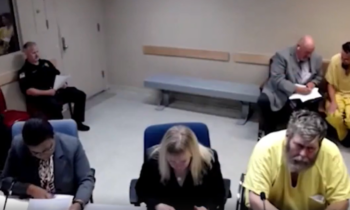

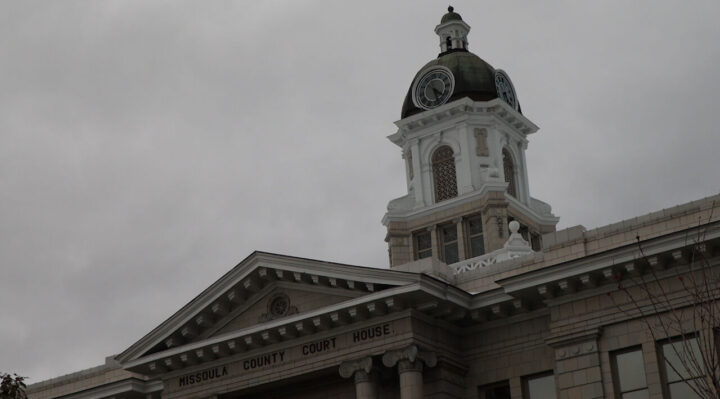
MISSOULA, Mont. – Christopher Martinez is set to appear in court for a hearing today in Missoula regarding his detention by federal Immigration and Custom Enforcement (ICE) agents.
Martinez is arguing that his Fourth Amendment rights were violated and that he was detained due to racial profiling when he was detained by ICE agents who mistook him for someone else.
Federal ICE agents, who were working in conjunction with Helena City Police Officers, had been searching for Anderson Linares, who is wanted for aggravated assault.
On June 30, Martinez was returning for an errand when he was pulled over by a Helena City Police Officer on the request of ICE agents who determined he might be a Venezuelan National.
Martinez was pulled over for driving with expired plates but was quickly joined by the ICE agents who requested his arrest, who questioned him about his immigration status, according to court documents.
Martinez’s team is arguing in court that his detention by ICE during a traffic stop is “an egregious violation of his Fourth Amendment rights.”
The Fourth Amendment guarantees “The right of the people to be secure in their persons, houses, papers, and effects, against unreasonable searches and seizures, shall not be violated, and no Warrants shall issue, but upon probable cause, supported by Oath or affirmation, and particularly describing the place to be searched, and the persons or things to be seized.”
Martinez’s team argued in court documents that his detainment was based on racial profiling and stereotyping.
They use evidence recorded from the interaction itself and interactions between officials beforehand to support their claim.
“Absent specific, articulable facts, the only connection tying Christopher to the target individuals is their shared apparent Latino ethnicity,” they wrote, “This sort of racial profiling is an egregious Fourth Amendment violation.”
Yesterday, District Judge Dana L. Christensen denied Martinez’s request to wear civilian clothing to the court appearance, meaning Martinez will have to wear detention-issued attire.
The judge cited the trial’s status as a civil hearing instead of a criminal hearing and said that the prejudice that might occur because of clothing would not be an issue, since the hearing would be held by a judge rather than a jury.