

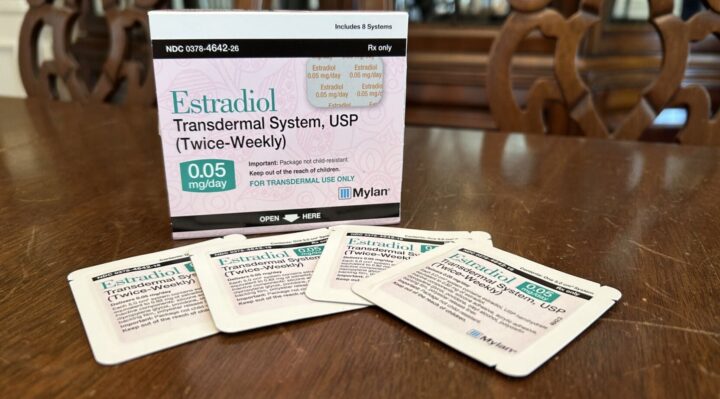
SPOKANE, Wash. — Menopausal women who rely on hormone patches for symptom relief are facing supply shortages as pharmacies struggle to keep up with increasing demand for the popular treatment method.
Dr. Kelley Mathia is an OBGYN physician who operates specialized menopause clinic Mathia Menopause Medicine. She says she’s witnessed the growing need for hormone therapy firsthand. Women seek her treatment for debilitating symptoms that significantly impact their daily lives.
The symptoms extend far beyond the commonly known hot flashes and night sweats. Women also experience deep fatigue, joint pain, unusual itching, heart palpitations and sleep disturbances.
“Hot flashes, night sweats, fatigue, brain fog such as memory problems. Can’t find the word that you want to find,” Mathia listed. “Deep fatigue, joint pain, itching in funny places like even your ears. Heart palpitations, sleep disturbances.”
Dr. Mathia operates her virtual clinic with her colleague and registered nurse Stella Reid.
They offer many types of treatment, including evidence-based menopause hormone therapy, which help women produce enough of the hormones they lose during menopause.
Estradiol patches have become the most popular delivery method. They release hormones trans dermally, or through the skin. Doctors prefer this method because it bypasses the liver, reducing the risk for harmful side effects. Additionally, patches are more cost-effective other options like pills or creams.
“We are giving it to you in a level that protects your bones, your heart, your brain alleviates your symptoms in a safe way,” Mathia explained.
The current shortage stems from a significant shift in how hormone therapy is perceived. Years ago, a study incorrectly linked hormone treatments to serious health risks, including breast cancer, stroke and heart attack. This led to a black box warning label on these medications, which discouraged many women and their doctors from using them.
However, the FDA removed that warning label last year after the original study was proven inaccurate.
“Since that black box warning came off, hormones are seen to be more safe and they’re being prescribed more readily and women want them,” Mathia said.
The change has created unprecedented demand for patches. Mathia attributes this surge not only to the FDA’s action but also to a cultural shift driven by social media and increased awareness about menopause care.
“I think that this generation of women who are entering into perimenopause and early menopause are saying we no longer want to suffer and just endure these symptoms,” Mathia said. “We want to be able to treat these symptoms and actually live a longer, healthier life.”
Stella Reid, a registered nurse and longtime women’s health advocate who manages much of the clinic’s patient communication, receives multiple daily requests from women whose pharmacies cannot fill their prescriptions.
“I’m getting four or 5 or 10 emails or text messages. ‘Hey, can you send my prescription to this pharmacy’?” Reid said.
Reid has experienced the shortage firsthand beyond just fielding patient calls, encountering the same supply issues when trying to fill her own prescriptions.
“Usually that would be just a text message saying, hey, we’re out of stock,” Reid said. “We’ll let you know when we get them in stock.”
Patients are forced to search multiple pharmacies for their medications, and some go without treatment for extended periods.
“They might get a supply for one month, but they can’t get three months, or they’re back ordered for a few weeks, and then they’re without their hormones. And some of those symptoms come right back,” Mathia said.
Healthcare providers expect the shortage to continue throughout 2026.
“It’s going to take a while for the manufacturers to get the supply up to meet the demand,” Mathia said. “Women are demanding the products. So it’s actually a good thing in the long run, but not so great when you’re trying to get your hormones because you have terrible night sweats and can’t sleep.”
In response to the shortage, clinics are exploring alternative treatment options. However, these present challenges since other hormone products are not always covered as well by insurance.
“We really do like you to stay consistent on your hormones, so we’d rather have you try another alternative way to get the transdermal method,” Mathia said.
The shortage also highlights broader healthcare access issues. Mathia notes there is only one menopause care provider for every 7,000 or more women who need treatment. She emphasizes that hormone therapy requires careful evaluation of each patient’s health history to ensure safety.
Reid encourages women experiencing menopause symptoms not to accept suffering as inevitable, emphasizing that effective treatments exist and women should advocate for proper care.
“No, you do not have to grin and bear it,” Reid said. “You can demand treatment from your physicians.”
Reid sees this generation of women as advocates for change, fighting for better healthcare not just for themselves but for future generations.
“We’re this generation of women that are fighting to feel the best that we can feel and have the best health care we can have,” Reid said. “We don’t want our 25-year-old daughters going through this when they’re 50.”
© 2026 KAYU FOX 28. All rights reserved. Content may not be reproduced, distributed, or transmitted without written permission.